
Indian benchmark indices, Sensex and Nifty, closed nearly flat on Thursday, influenced by the US Federal Reserve's interest rate hike and indications of further monetary tightening. Despite some intraday gains, caution prevailed, with foreign institutional investors continuing to offload equities. Meanwhile, the National Stock Exchange of India's (NSE) mega initial public offering opened for subscription, garnering 39 per cent subscription on its first day.

India-US ties may be strained, but abandoning the relationship is not the answer; India must deal with Washington firmly without becoming either servile or hostile, asserts Ambassador T P Sreenivasan.

External Affairs Minister S Jaishankar stated that the world is entering an age of flux marked by conflicts and tariff volatility, requiring India to respond effectively to these challenges. He reiterated India's consistent stance on the Russia-Ukraine conflict, advocating for dialogue and diplomacy, and highlighted India's efforts to engage with both sides. Jaishankar also emphasised India's role in championing the voice of the Global South and navigating complex strategic partnerships in a multi-aligned world.

CDSCO has warned consumers against using two unauthorised Pakistani whitening creams after finding excessive heavy metals and regulatory violations.

Indian benchmark indices Sensex and Nifty extended their losses for a third consecutive day, driven by firm crude oil prices, elevated global bond yields, and significant foreign fund outflows, making investors cautious.

US Secretary of State Marco Rubio is on a three-day visit to India to discuss bilateral ties in energy, trade, investment, defence, and critical technologies, as well as the West Asia crisis. His visit aims to strengthen the India-US Comprehensive Global Strategic Partnership amidst existing friction, with a focus on finalising a proposed bilateral trade deal.

That means making it easier to invest, protecting investors through predictable rules, and avoiding policy reversals after investments have been made, notes Rajeswari Sengupta.

Indian benchmark indices, Sensex and Nifty, saw an early rebound after significant losses, driven by value buying, though elevated oil prices and anticipation of the US Federal Reserve's policy decision tempered gains. Track Sensex, Nifty on September 16.
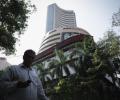
Indian benchmark indices, Sensex and Nifty, closed almost flat in choppy trade as investors remained cautious due to ongoing uncertainty in West Asia, relentless foreign fund outflows, and anticipation of the RBI's monetary policy decision.

India has strongly criticised the US decision to suspend the Permanent Labor Certification (PERM) program for eight major IT firms, including Indian giants like TCS and Wipro. New Delhi also condemned US Vice President JD Vance's description of foreign professionals as "indentured servants," calling it "unwarranted and deeply offensive." The move is expected to impact thousands of Indian tech professionals seeking permanent residency in the US and further strains bilateral ties.

Indian benchmark indices, Sensex and Nifty, closed marginally lower due to elevated crude oil prices, fresh US-Iran tensions, and expectations of a tighter monetary policy from the US Federal Reserve, despite strong domestic GDP growth.

New Delhi must look for formal, institutional statements issued directly from Washington rather than rely on casual pronouncements meant for local audiences, notes Ambassador Rajasekhar.

US Secretary of State Marco Rubio's visit to India this week underscores the complex dynamics of global energy policy, as Washington re-evaluates sanctions on Russian oil buyers amidst India's continued reliance on Russian crude.

The conversations on July 22 and 23, 1962, meetings in Geneva between V K Krishna Menon, India's defence minister at the time, and Chinese vice premier Chen Yi are important because, had they been followed up, the subsequent border war may perhaps have been avoided, notes former foreign secretary Shyam Saran.

A 25-basis-point increase would restore some real monetary restraint when expected inflation has risen, liquidity remains easy and growth is strong, points out Amarendu Nandy.
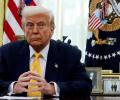
US President Donald Trump is set to engage in a series of high-profile meetings during the 81st United Nations General Assembly High-Level Week in New York, including discussions with NYC Mayor Zohran Mamdani, French President Emmanuel Macron, and Ukrainian President Volodymyr Zelenskyy.

India is deeply concerned by the growing consolidation of Pakistan-backed jihadi and radical Islamist groups in Bangladesh, particularly in the strategically vital Chittagong Hill Tracts, which experts warn is transforming the country into a new safe haven for these networks and posing a direct threat to India's security.
India's foreign trap shooting coach, Peter Wilson, has voiced his disappointment over the exclusion of World Championship bronze medallist Zorawar Singh from the Asian Games squad. Wilson highlighted Zorawar's calibre and the "great shame" of his omission, attributing it largely to the National Rifle Association of India's (NRAI) selection policy which prioritises domestic trials over international results. He also addressed the Indian shotgun team's recent poor World Cup performances and discussed the need for systemic changes to improve access to shotgun shooting in India.

Leading private banks in India, including HDFC Bank, ICICI Bank, and Axis Bank, experienced a decline in net interest margins (NIMs) during the second quarter of the financial year due to significant deposit mobilisation under the Foreign Currency Non-Resident (Bank), or FCNR (B), scheme. However, banks anticipate a recovery in margins in the coming quarters as these funds are deployed and the interest-rate cycle supports lending yields.

For India, the goal is not simply to host another grand diplomatic gathering. It is to prove that a diverse coalition of emerging powers can still deliver.

US Secretary of State Marco Rubio kick-started a three-day visit to India on Tuesday to advance bilateral ties in energy, trade and investment, defence, critical technologies, and exchange views on the West Asia crisis.

The Indian stock market experienced a significant downturn, with the Sensex crashing over 1,000 points and the Nifty hitting a fresh 52-week low, driven by sustained selling from foreign institutional investors, the RBI's monetary policy tightening, and elevated Brent crude prices.

The Ministry of External Affairs stated that India's participation in the 2027 SAF Games in Pakistan will be guided by the sports ministry's policy, which permits Indian athletes to compete in events with Pakistani participants and vice-versa. Separately, the MEA also commented on the ongoing legal proceedings for seven foreign nationals, including a US citizen and six Ukrainians, who were recently chargesheeted by the NIA for illegal entry and movement, though not under UAPA at this stage.

India and China are in what experts call 'a cooperation-versus-competition situation'.

If the new MDR regime is rolled out from the middle of this month, as scheduled, it should count as one of the boldest political actions by the Modi government on an economic-policy issue, and a signal that it is less worried about erosion of political capital it draws from one of its key constituencies, notes A K Bhattacharya.

90 per cent of institutions recorded no improvement in international student metrics, despite government initiatives such as the Study in India programme, UGC regulations on internationalisation, and efforts to attract foreign students.

Indian benchmark indices, Sensex and Nifty, traded marginally higher in early trade despite the US Federal Reserve's recent rate hike and indications of further tightening, with the National Stock Exchange's much-anticipated Rs 22,569-crore IPO also opening for subscription.

The Finance Ministry has refuted allegations that US pressure influenced the decision to levy a 0.4 per cent Merchant Discount Rate (MDR) on select UPI payments. The ministry clarified that the NPCI guidelines prioritise RuPay credit cards on UPI to promote domestic alternatives and ensure a self-sustaining revenue model for smaller domestic companies, countering claims of favouring foreign payment providers.

Indian benchmark equity indices, Sensex and Nifty, closed higher on Monday, driven by softer-than-expected US jobs data which reduced expectations of aggressive monetary tightening by the US Federal Reserve, boosting risk appetite across emerging markets.

Khan said that India, which is a part of Quad, has imported oil from Russia despite American sanctions.

Marco Rubio will visit Mumbai and Jamnagar to discuss energy cooperation as S Jaishankar says India-US trade talks are nearing a landing point, with a few issues unresolved.

The CBSE has issued revised guidelines for its three-language policy, granting a one-time exemption to current Class 10 students from studying three languages. Class 9 students will still study three languages but can include two foreign languages and one Indian language, a significant shift from earlier mandates.
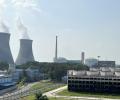
Atomic Energy Commission Chairman Ajit Kumar Mohanty announced that India's private sector is projected to invest Rs 7.5 lakh crore and contribute 30 GW towards the nation's goal of achieving 100 GW nuclear power capacity by 2047. This marks a significant policy shift, facilitated by the SHANTI Act, encouraging private participation in nuclear energy beyond the traditional public sector model. The country is also exploring Small Modular Reactors (SMRs) for industrial needs and advancing its three-stage nuclear power programme, leveraging its substantial thorium reserves.

Bangladesh has once again sought the extradition of former premier Sheikh Hasina from India during High Commissioner Dinesh Trivedi's first meeting with Prime Minister Tarique Rahman in Dhaka, amidst fresh strains in ties between the two countries following Hasina's controversial virtual media interaction in New Delhi.

The Indian government has approved the sale of a 60.72 per cent stake in IDBI Bank Ltd to Canadian billionaire Prem Watsa's Fairfax Financial Holdings Ltd for approximately 52,878 crore, a move that reflects improving India-Canada ties and marks a significant turning point for the bank.

Analysts predict that developments in the West Asia conflict, crude oil prices, and upcoming US inflation data will be the primary factors influencing the Indian stock market next week, alongside foreign investor activity and global market trends.
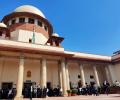
A bench comprising Chief Justice DY Chandrachud and Justices JB Pardiwala and Manoj Misra said Indian firms, involved in the export of arms and equipment to Israel, may be sued for breach of contractual obligations if they are stopped by it from supplying.

The Delhi High Court on Wednesday sought a report from jail authorities regarding the non-appearance of separatist leader Yasin Malik for a virtual hearing in a terror funding case. The National Investigation Agency (NIA) is seeking the death penalty for Malik, who is currently serving a life term, arguing that his guilty plea should not preclude capital punishment for a terrorist. Malik had previously expressed a desire to argue in-person against the NIA's plea.

Analysts predict that the Reserve Bank of India's interest rate decision, the evolving situation in West Asia involving the US-Iran conflict, and crude oil prices will be the primary factors influencing investor sentiment in the Indian stock market this week.

It is important to understand that the rupee's appreciation, driven by the 2013 special swap scheme, reduced India's import costs for petroleum, oil, and gold, points out Dr Ashwani Mahajan, National Co-Convenor, Swadeshi Jagaran Manch.
